Why You Should Never Buy a Cheap Counterfeit Laptop Charger (It Could Kill Your Tech)
Paul Betteridge
Workshop Owner
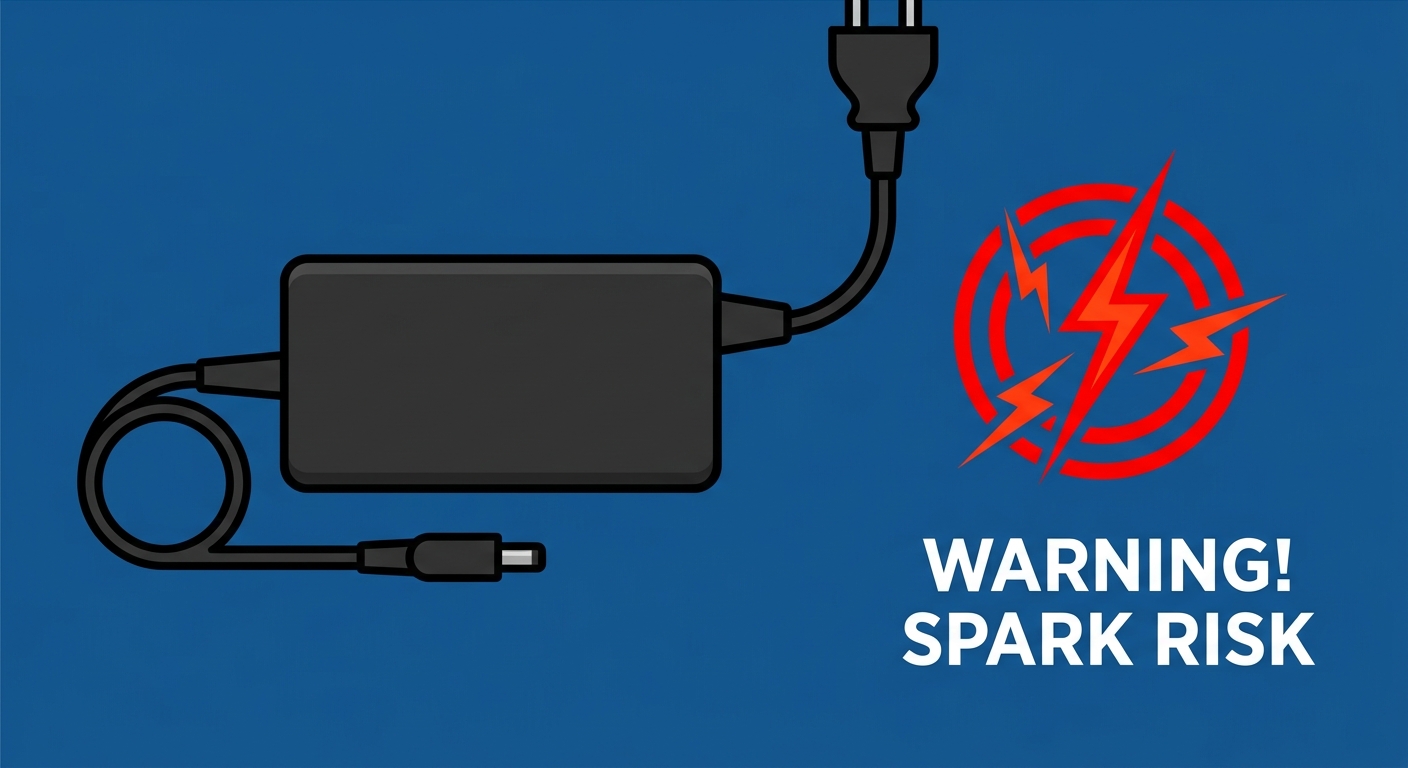
The True Cost of a £10 Laptop Charger
We've all been there: your original laptop or MacBook charger gets frayed, chewed by a pet, or left behind in a cafe. You look online and see the manufacturer replacement (OEM) costs £60 to £80. But scroll down, and there are dozens of generic, unbranded chargers for just £10 to £15.
It is tempting to click buy. But in my years diagnosing fried motherboards in my Poole workshop, I can tell you: cheap unbranded chargers are one of the single biggest threats to your laptop's survival.
Here is the technical breakdown of what is happening under the hood when you plug a counterfeit charger into your computer.
1. Lack of Ripple Noise Filtration
A laptop operates on clean Direct Current (DC). The charger (AC Adapter) must convert high-voltage Alternating Current (AC) from the wall socket into smooth, steady DC.
Premium chargers (Apple, Dell, HP, Lenovo) contain large, high-capacity capacitors and copper coils to filter out "ripple noise." Unbranded counterfeit chargers skimp on these filters. They send erratic, noisy, spiked voltages directly into your laptop. This eventually burns out the delicate Power Management Integrated Circuit (PMIC) on your laptop's main logic board, bricking the machine.
2. Fake Safety Certifications
If you look at the back of a cheap charger, you will often see safety markings (like CE, FCC, or TÜV) stamped onto the sticker. However, on laboratory testing of these chargers, most fail basic earth safety tolerances.
These chargers lack isolating protection barriers. The high-voltage AC side and the low-voltage DC side are situated incredibly close on cheap circuit boards. If a single trace fails or moisture enters, a full 230 volts can travel down the wire directly into your hand, your child, or your keyboard, presenting genuine safety and shock hazards.
3. Extreme Fire Hazard
Original chargers are designed to slide into thermal throttling or trip an internal fuse if they exceed a certain safety temperature. Cheap chargers do not have over-temperature or over-current protections. Under full load, they can exceed 90°C (hot enough to melt plastic) and are a leading cause of electrical house fires.
How to Spot a Dangerous Charger:
- The Weight Test: Counterfeit chargers are noticeably light. They omit the heavy, protective copper coils, large transformers, and metal shield casings.
- Low-Quality Print: Check the labels. Typographic mistakes, blurry logo designs, or misaligned CE marks are indicators of replica gear.
- Extreme Heat: If the adapter is too hot to hold comfortably back in your hand while charging your laptop, unplug it immediately.
What should you do instead?
If you can't buy an original manufacturer replacement, buy a high-quality, safety-tested third-party brand (like Anker, Baseus, or Belkin) which are certified by major regulatory bodies.
If you suspect your laptop has been damaged by a faulty charger (e.g. won't turn on, smells of burning, battery not holding charge), bring it to my workshop. I specialise in component-level diagnostics and can assess if the motherboard's power rails are repairable.
Have a similar problem?
I see these issues daily in my Poole workshop. Start an enquiry to check your options and resolve the issue.